
If you’ve ever celebrated a keyword ranking win, then went into your Shopify analytics dashboard and noticed sales haven’t moved, you’re not alone.
I’ve worked with fashion and lifestyle e-commerce brands for years, and this is one of the most common and frustrating patterns I see.
You put in the work, your search engine rankings improve, but somehow, your revenue is still flat.
In 2026, SEO is not just about rankings. It’s about aligning your visibility strategy with your business goals, clear messaging, and long-term vision so customers understand what you do and search engines recommend your brand higher in search.
Between AI-powered search results, zero-click searches, shopping integrations, and recommendation-driven discovery, the brands that are winning aren’t chasing vanity metrics. They’re building business-first SEO strategies that connect visibility to real revenue.

I’m Glynis Tao, founder of Chase Your Dreams Consulting. I’m an e-commerce SEO expert and AI search strategist with over 25 years of experience in the fashion industry, including time working with global brands and running my own clothing business. I’ve been on both sides of the screen, both as the founder refreshing analytics late at night and as the strategist figuring out why website traffic isn’t converting.
This article is for fashion and lifestyle brand founders, marketing leads, and consultants who are tired of SEO that looks good on paper but doesn’t actually move the business forward.
In this guide, we’ll cover:
- What business-first SEO really means
- Why rankings alone no longer drive growth
- The SEO metrics that actually matter in 2026
- How AI search has changed the way customers discover brands
- A five-step framework for improving your SEO strategy to increase revenue
- A real small business fashion brand example that led to a 333% increase in organic purchases
If you want SEO that supports real business growth, not just reports, this is where it starts.
What Is Business-First SEO (Search Engine Optimization)?
Business-first SEO is exactly how it should sound. It’s SEO that starts with your business goals, not a list of keywords.
Instead of asking, “What can we rank for?”, the better question is, “What actually brings the right people to our site, helps them understand what we offer, and turns them into new customers?”
When I talk about business-first SEO, I’m talking about using SEO as a business strategy, not a checklist. That means focusing on optimizing pages that generate revenue, like product pages and collections, and targeting high-quality keywords with search intent that aligns with real buying decisions. It also means paying attention to conversion rate, user experience, and clarity, because traffic alone doesn’t grow a business if people don’t know what to do once they arrive.
It also means thinking beyond traditional Google search results rankings. Today, visibility shows up across multiple search surfaces, including AI-driven search tools, shopping results, and recommendation engines. If your site isn’t clear, structured, and aligned with your goals, it’s easy to be visible without being chosen.
Traditional SEO often puts the spotlight on rankings, impressions, and traffic volume, even when that traffic has little intent. I see a lot of blog content that performs well in reports but is completely disconnected from products, customers, and revenue. The numbers look impressive, but the business impact is missing.
For small business owners and growing fashion brands, this distinction matters more than ever. You don’t have unlimited time, budget, or energy to spend on strategies that don’t support real growth. All the time and effort put into the business needs to earn its place.
That’s why I treat business SEO as a long-term growth asset. Business SEO helps capture demand, support your brand, and build visibility that compounds over time. When SEO is aligned with your business goals, brand voice, and customer journey, it stops feeling stressful or confusing and starts feeling supportive and strategic.
Traditional SEO vs. Business-First SEO
Traditional SEO often focuses on activity and visibility metrics. The primary goal is usually to improve rankings, increase impressions, and drive more traffic to your website, with success measured by keyword positions and monthly reports. New content is frequently created to target search terms without always considering how they are relevant to your business, your products or services, buying intent, or revenue. While this approach can increase visibility, it doesn’t always translate into meaningful business growth.
Business-first SEO, on the other hand, starts with the business itself. The strategy is built around revenue goals, customer intent, and long-term growth. Success is measured by outcomes such as qualified search traffic, conversion rate, organic revenue, and brand demand. Content and optimization efforts are tied directly to product pages, collections, and decision-making moments in the customer journey. Instead of chasing every algorithm update, business-first SEO focuses on clarity, alignment, and building foundations that perform well across both traditional and AI-driven search.
Why Rankings Alone Don’t Drive Growth Anymore
For a long time, ranking on page one of search engine results, especially in the number one spot, felt like the ultimate SEO win. And for years, that goal made sense. But the way people search, discover brands, and make a purchase has changed—rankings are no longer the full picture.
Today, rankings are just one piece of visibility, not the end goal.
Here’s what’s different now.
First, AI-powered search results are changing how people interact with Google. With features like AI Overviews, users often get summarized answers directly on the search results page. Even if your site ranks at the top, people may get what they need without ever clicking through.
Second, zero-click searches are becoming more common. Many searches, especially informational or comparison-based ones, now end right on the results page. The search experience is designed to answer questions faster, not necessarily send traffic to websites.
Third, visual and shopping results are taking up more space. Product carousels, Google Shopping listings, and visual discovery features often appear above traditional organic results. For e-commerce brands, this means visibility depends just as much on feeds, structure, and product clarity as it does on rankings.
Finally, rankings don’t automatically lead to traffic, and traffic doesn’t automatically lead to sales. I regularly see brands ranking well for keywords that don’t convert, don’t align with what they actually sell, or don’t match where potential customers are in their buying journey.
SEO beyond rankings means understanding how people move from discovery to consideration and, ultimately, to purchase. If your SEO strategy stops at “we rank,” you’re only solving part of the problem, and often not the part that grows the business.
The SEO Metrics That Actually Matter in 2026 (For Enterprises & Small Businesses)
If rankings aren’t the goal anymore, it’s fair to ask what aspects of your SEO performance you should be paying attention to instead.
When I work with clients using a business-first SEO approach, these are the metrics we focus on because they connect directly to growth, not just visibility.
1. Organic revenue (not just traffic)
First, organic revenue matters more than raw traffic. It’s important to understand how much revenue is coming from organic search, Google Shopping, and AI-driven discovery through tools like ChatGPT, Gemini, and AI Overviews. Although your e-commerce business may be getting high traffic, it's only useful if it leads to sales.
2. Conversion rate by landing page
Next, I look closely at conversion rate by landing page, identifying which pages are actually turning visitors into customers, and which pages are attracting attention but not action. This helps us prioritize where to optimize instead of guessing.
3. Brand search growth
Brand search growth is another key signal. When more people are searching for your brand by name, it usually means awareness, trust, and demand are growing. That kind of visibility is hard to fake and incredibly valuable over time.
4. Product feed and shopping performance
For e-commerce brands, product feed and shopping performance are just as important as traditional SEO. Visibility in shopping results often plays a direct role in purchasing decisions, especially in fashion where customers want to compare, browse, and see products quickly.
5. Indexed vs. sellable products
Finally, I pay attention to indexed versus sellable products. If search engines can’t properly index your products, AI-driven tools can’t recommend them. This is one of those behind-the-scenes issues that quietly limits growth if it’s not addressed.
When you focus on these metrics, the conversation shifts. Instead of asking, “How are we ranking?” you start asking, “Is SEO actually helping the business grow?”
How AI Search Changed the SEO Game
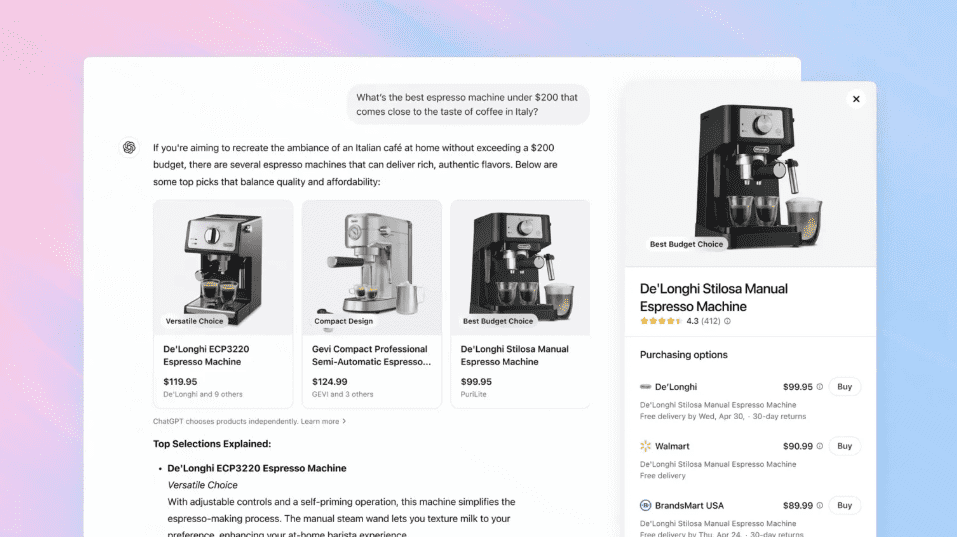
AI didn’t just change SEO. It fundamentally changed how people discover brands and make decisions online.
Search tools like Google, ChatGPT, and Gemini are starting to act less like traditional search engines and more like recommendation engines. Instead of scrolling through a list of links, people are asking questions like, “What should I buy?” or “What’s the best option for me?” and expecting a clear answer. For e-commerce brands, this shift is huge, which is why adapting your SEO efforts to these changes is more important than ever.
What this means for e-commerce brands
Discovery now happens through summaries, comparisons, and curated suggestions, not just blue links. Customers are often getting context before they ever visit a website, which means your content, products, and brand signals need to be easy for AI systems to understand and trust.
This is why things like structured data, product feeds, and overall site clarity matter more than keyword density ever did. AI-driven search tools prioritize clear product information, strong site architecture, consistent brand signals, and signals of trust and authority across the web.
I go deeper into this shift in my article, SEO in the Age of AI: How to Drive Traffic in 2025, where I break down how AI-driven discovery is reshaping traffic patterns and what brands need to focus on instead of traditional SEO tactics. You can also explore What Are Google’s AI Overviews? for a closer look at how Google is presenting AI-generated summaries directly in search results and what that means for visibility.
Because of these changes, SEO today overlaps with far more than keywords and content. It touches product strategy, digital marketing strategy, user experience and conversion optimization, brand messaging, and technical infrastructure. When those pieces are aligned, your brand is easier to surface, easier to recommend, and easier to choose in an AI-driven search environment.
Understanding how AI search works is important, but insight alone doesn’t drive results. What matters is how you apply this knowledge to your SEO strategy in a practical, business-focused way.
A 5-Step Framework for Business SEO
This is the same framework I use with fashion and lifestyle brands when we’re buildingorganic SEO strategies that are meant to support real business growth, not just rankings.
Step 1: Start with an audit that’s grounded in business goals
This goes beyond technical SEO errors and keyword gaps. We look at which pages are actually driving revenue, where users are dropping off, and what’s getting in the way of conversions. The goal is to understand how the site is performing as a sales tool, not just a website.
Step 2: Prioritize high-intent keywords
During the keyword research phase, instead of chasing every possible search term, we focus on relevant keywords that signal buying intent. That includes product-led searches, category-level intent, and comparison or solution-aware queries. This is where competitor analysis becomes especially important, because it helps clarify where demand already exists and how your brand fits into that landscape.
Step 3: Align content with the customer journey
Top-of-funnel content plays an important role in building awareness, while bottom-of-funnel content supports purchasing decisions. Both matter, but they need to work together. Content should guide customers naturally from discovery to decision, not live in isolation.
Step 4: Fix indexing and product feed visibility
If your products aren’t showing up in Google Shopping, AI Overviews, or recommendation-driven search experiences, they may as well not exist. Making sure your products are properly indexed and clearly structured is essential for visibility in both traditional and AI-driven search.
Step 5: Measure SEO impact the right way
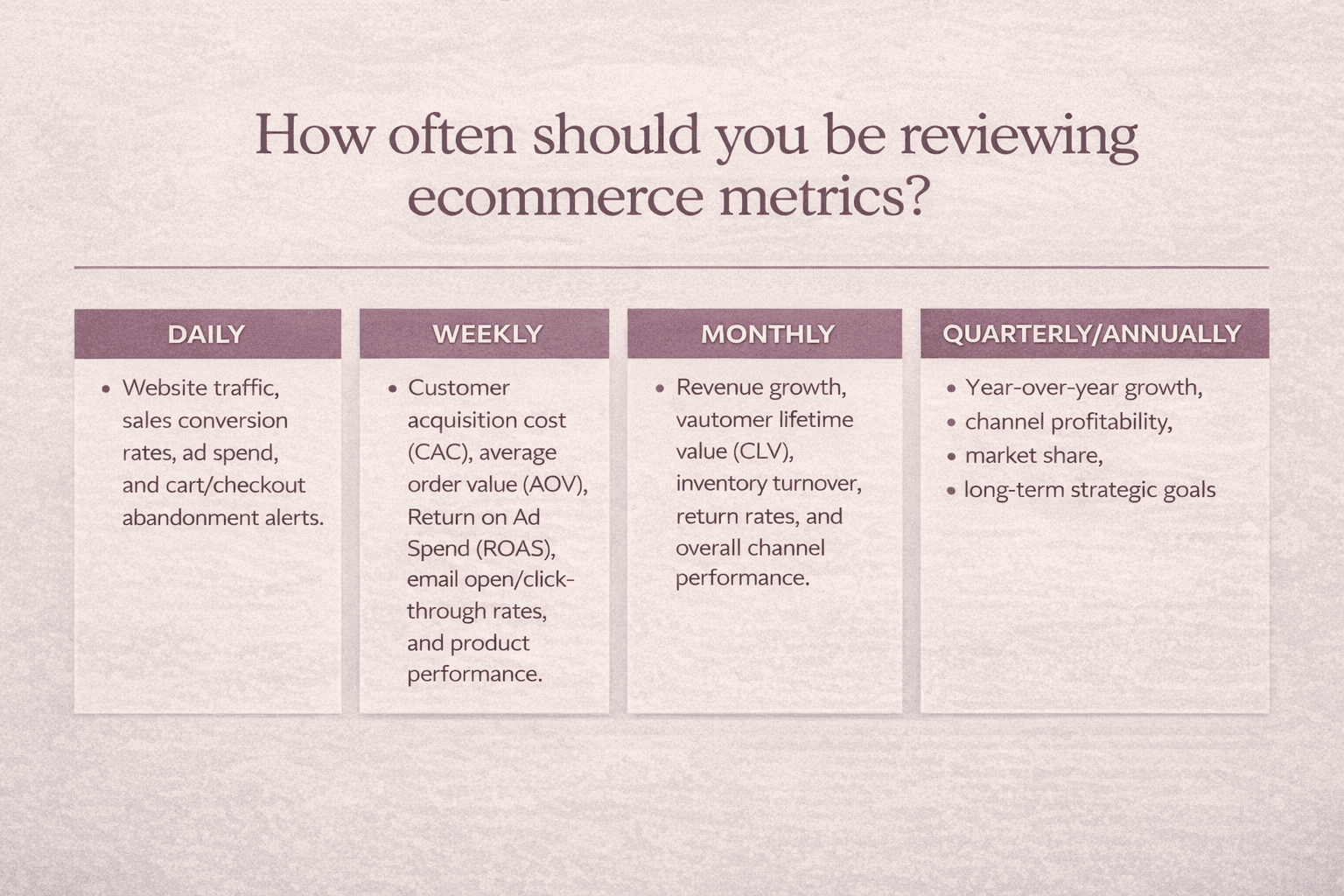
Instead of focusing only on rankings, we track revenue, assisted conversions, product engagement, and brand demand growth. These metrics tell a much clearer story about whether SEO is actually supporting the business.
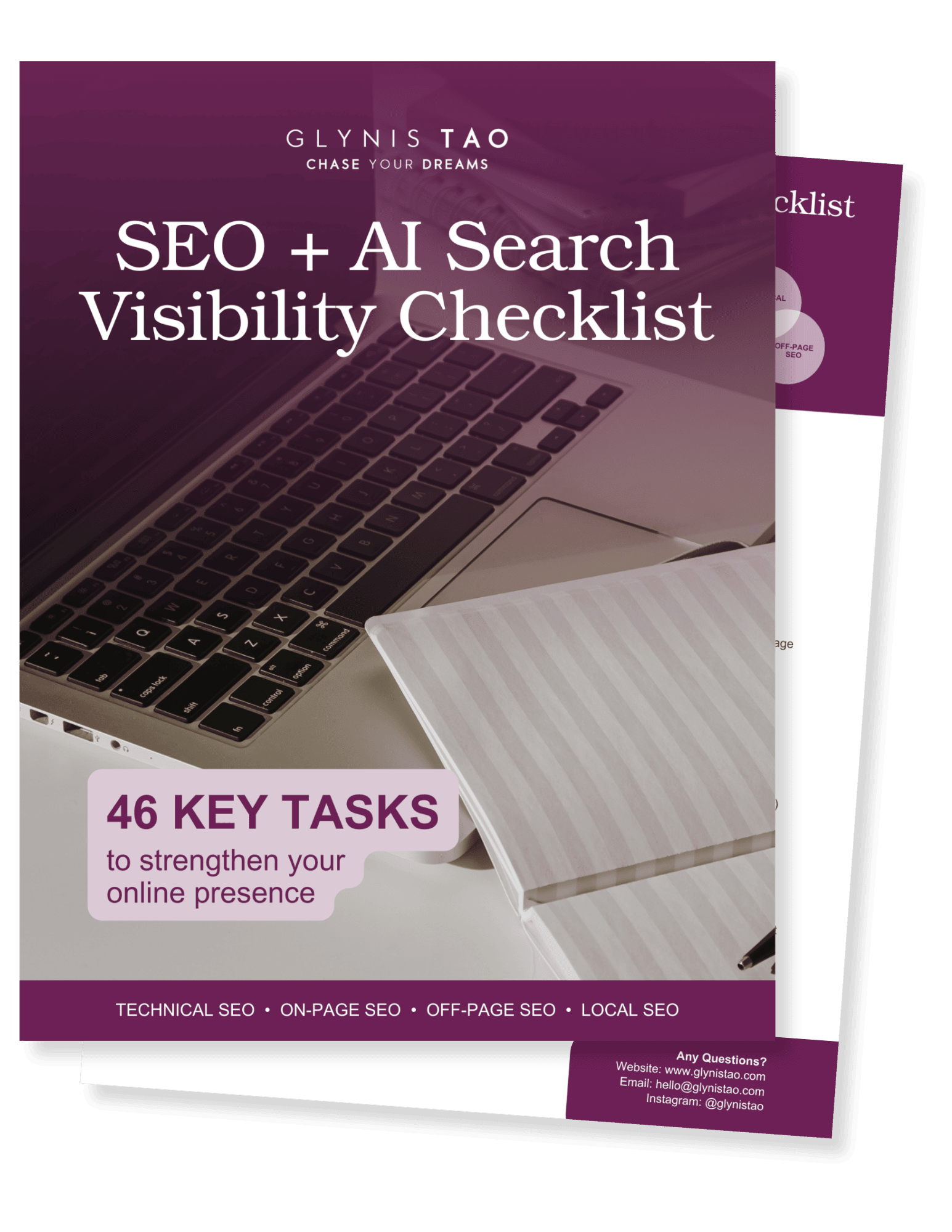 If you want a practical starting point, download my free SEO + AI Search Visibility Checklist to understand what matters most right now and where your site may be falling short: https://go.glynistao.com/seo-ai-search-visibility-checklist
And when you’re ready to turn that clarity into a strategy, the best next step is an Online Visibility Roadmap. It’s designed to uncover where SEO is leaking revenue and give you a clear, prioritized plan to move forward: https://glynistao.com/services/online-visibility-roadmap/
This is how I approach e-commerce SEO for long-term growth, with structure, clarity, and business outcomes leading the way.
Case Study: How One Fashion Brand Grew Organic Sales by +333% with Small Business SEO Strategies
One of my favourite examples of SEO that actually drives sales comes from my work with Open Court, a women-led fashion and lifestyle brand in the golf, tennis, and pickleball space.
When we first started working together, the brand had strong rankings for informational keywords, but that visibility wasn’t translating into sales. Product pages weren’t converting as well as they should have, Google Shopping visibility was limited, and organic revenue had remained flat despite steady traffic.
Instead of chasing more keywords, we focused on fixing the foundations. We re-optimized their product detail pages with clearer naming, stronger intent matching, and better structure in their title tags and meta descriptions. We improved site architecture and internal linking so both customers and search engines could navigate the site more easily. We also cleaned up product feeds and indexing issues to make sure products were eligible to appear in Google Shopping and AI-driven discovery surfaces. Most importantly, we shifted the strategy away from traffic volume and toward buyer intent.
The results spoke for themselves. Open Court saw a 333% increase in organic product purchases, a higher average order value, and stronger brand search growth in a relatively short period of time.
This wasn’t about finding new keywords or chasing rankings. It was about aligning SEO with how customers actually shop and making it easier for the right products to be discovered, understood, and chosen.
If you want to see exactly how this played out, you can explore the full Open Court SEO case study here and see how a business-first SEO approach translated into measurable revenue growth.
SEO Is Not a Checkbox. It’s a Business Growth Engine.

SEO only works when it supports the bigger picture of your business. Rankings on their own don’t mean much if they don’t lead to the right kind of traffic, real engagement, and ultimately, paying customers.
In 2026, business-first SEO is about being intentional. It’s choosing quality over quantity, strategy over scattered tactics, and visibility that helps people understand, trust, and choose your brand. It’s not about chasing every algorithm update or quick win. It’s about building foundations that support long-term growth.
When SEO is aligned with your brand positioning, product strategy, user experience, and how customers discover brands through AI-driven search, it becomes something much more powerful. It becomes a growth engine that works quietly and consistently in the background, supporting your business as it evolves.
Ready to Shift to Business-First SEO?
If you’re ready to move beyond rankings and build SEO that actually supports your goals, start with clarity.
Begin with the Online Visibility Roadmap™ to understand where your SEO is helping, where it’s holding you back, and what to focus on next.
You can also download the SEO + AI Visibility Checklist for a practical snapshot of what matters most right now.
Let’s turn visibility into momentum, and traffic into sales.