
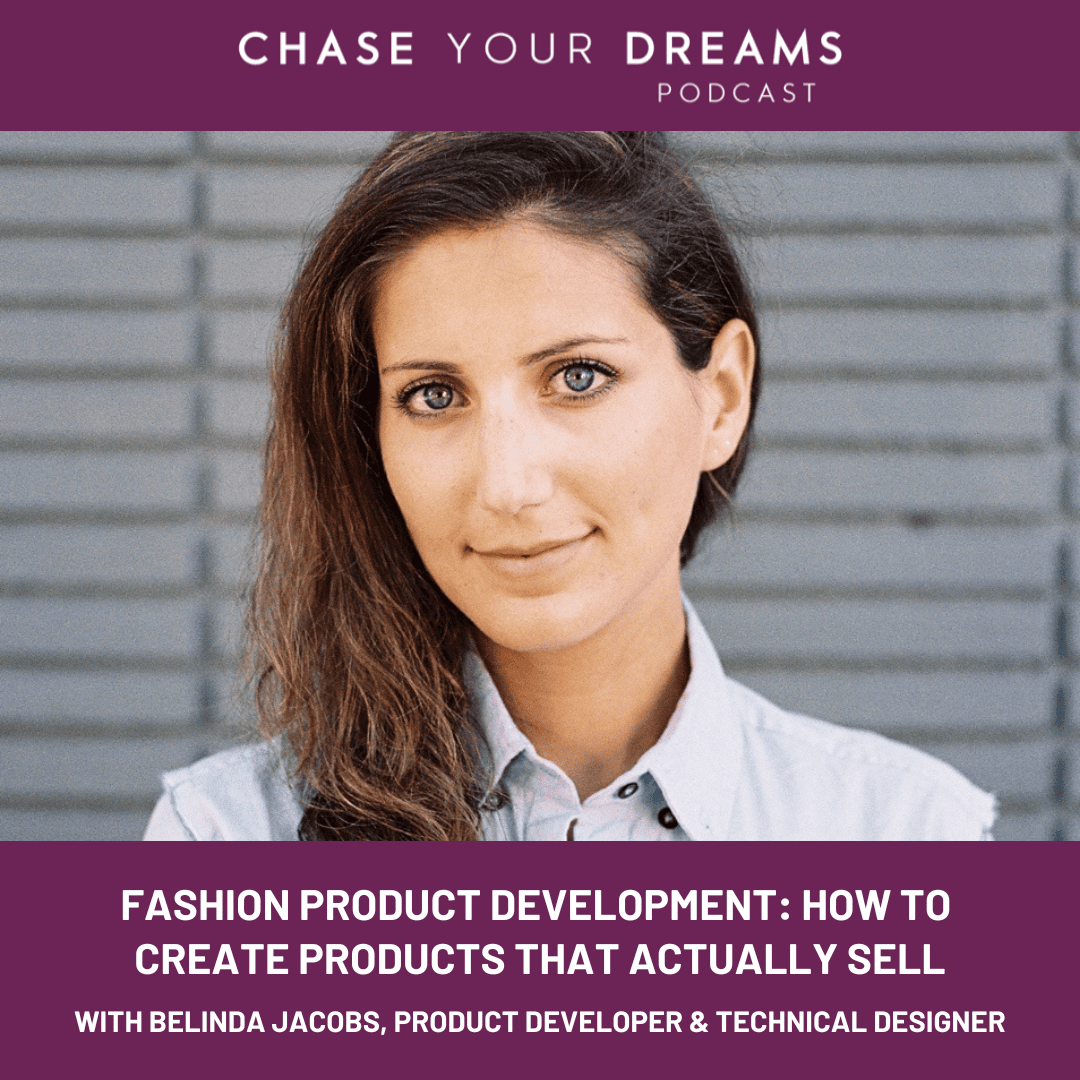
In this episode, Belinda Jacobs, a seasoned product developer and technical designer, shares how she built her career by solving overlooked challenges between design and manufacturing, With over 15 years of experience, Belinda is the founder of Tech Packs Co., a product and design development company that helps brands turn ideas into scalable, production-ready products. She offers an inside look at the realities of product development, emphasizing the critical role of detailed tech packs, clear timelines, and aligning product decisions with both budget and brand strategy. This conversation highlights common and costly mistakes founders make and explains how to control profit margins through thoughtful design, pricing, and material choices. Belinda also explores how to balance creativity with commercial viability, while introducing the opportunity to leverage SEO and customer data to better predict demand and guide product decisions. This episode reframes product development as both a strategic and operational discipline, where organization, continuous learning, and data-informed thinking are essential to building products that not only look good, but sell and scale sustainably.
About Belinda Jacobs
Belinda Jacobs is a product developer and technical designer, and the founder of Tech Packs Co., where she helps fashion brands transform ideas into production-ready products that are both creative and commercially viable. With over 15 years of experience across design and manufacturing, she has developed thousands of products for hundreds of brands, with work featured in the Apple Store, Vogue, and Shark Tank. Belinda began her career as a fashion designer, but quickly became known for her ability to solve recurring production challenges that often derail even the most promising concepts. After relocating to the United States, she launched her own business to support emerging brands and independent designers, focusing on the often-overlooked bridge between vision and execution. Today, her work is defined by a practical, systems-driven approach that helps founders avoid costly mistakes, streamline development, and build products that are aligned with real customer demand and long-term business growth.
Contact Info
Website: https://techpacks.co
Instagram: @techpacks_co
Linkedin: @belindaalicejacobs
Takeaways
- Invest time upfront in creating a clear and detailed tech pack to avoid costly errors.
- Set realistic expectations when planning your product development timeline and budget.
- Approach product development as a strategic discipline, aligning every decision with your brand goals, target price point, and customer demand.
- Express creative ideas at the beginning of product development then refine it over time through constraints to balance creativity with commercial viability.
- Leverage search data and customer insights to forecast demand and guide your product line.
- Stay highly organized and build strong communication systems.
- Start with products that match your current capacity, whether that means simpler designs, smaller quantities, or more accessible materials.
- Think long-term by developing products that can be iterated on or expanded into a cohesive, scalable product line.
Interview Themes
What is product development?
Product development is the bridge between design and manufacturing. It includes creating detailed specifications, developing samples, sourcing materials, and going through multiple rounds of refinement. For a product to successfully scale, it’s important during the development phase to have clear communication, technical details, and ongoing problem-solving.
Why are tech packs essential to successful product development?
A tech pack is the blueprint for your product. It outlines and communicates everything a manufacturer needs to know about your product so it can be correctly made. Taking the time to build a strong tech pack early on makes the entire process smoother.
When should founders bring in external expertise?
If a product is a key part of the brand, being produced in larger quantities, or needs to move quickly, bringing in an expert early can save time and money. While it is possible to figure things out by yourself, the process often involves trial and error that can become expensive.
How can data be used to create products that actually sell?
Customer insights and search data can help founders understand what people are already looking for. This makes it easier to design products that match real demand instead of relying only on intuition or trends. Using data alongside creativity leads to more informed decisions and better outcomes.
What mindset and skills help founders succeed in product development long-term?
A willingness to keep learning and adapting is key. Product development is always changing, and every project comes with new challenges. Founders who stay curious, flexible, and detail-oriented are better prepared to handle the process and build a sustainable business. Organization is also a huge part of running a product-based business. Managing timelines, coordinating with suppliers, tracking samples, and keeping documentation updated all require strong systems. Staying organized helps keep everything on track and reduces unnecessary delays.
Chapters
00:00 Introduction to Product Development and Belinda's Journey
02:26 Understanding Product Development Roles
04:58 Common Misconceptions in Product Development
10:08 The Product Development Process Explained
12:33 Avoiding Costly Mistakes in Manufacturing
15:17 When to Bring in a Product Developer
17:20 Balancing Creativity and Commercial Viability
20:11 Signs of a Non-Sellable Product
22:37 The Role of Tech Packs in Product Development
25:22 Leveraging SEO Data for Product Development
27:48 Skills Modern Founders Need
Transcript
Belinda Jacobs
A specifically good product development process is really anchored around what the brand's goals are for, not just for that specific product but for their brand in general and looking at what kind of budget they have again and what kind of timeline they have again because there are just like there are you know, a million different types of products out there. There's also a million different ways that you can approach product development or you can approach manufacturing in general. So I think starting with that lens of what do we have the capacity for? And what are our goals? If you can answer those questions clearly, you can pick the development route more effectively.
Glynis Tao
Welcome to Chase Your Dreams, a podcast for fashion entrepreneurs who want to build a purposeful and profitable clothing business so they can make a living doing what they love. I'm your host, Glynis Tao, an apparel business consultant and SEO specialist with 20 years apparel industry experience. I'm also a mom to a wonderfully energetic little boy named Chase.
Today's guest is Belinda Jacobs, a product developer and technical designer at Tech Packs Co. where she helps fashion brands turn ideas into well-built production-ready products. With over 15 years of experience in fashion and manufacturing, Belinda has developed thousands of products for hundreds of brands. Her work has been featured in places like the Apple Store, Vogue, and even Shark Tank. But what really sets her apart is her focus on helping founders create products that are not just creative, but purposeful and profitable. She understands a part of the business that many founders struggle with the most. How to take a vision and translate it into something that can actually be produced, scaled and sold without costly mistakes.
In today's conversation, we are diving into what really goes on behind the scenes of product development, where brands tend to lose money without realizing it, and how to build products that align with real customer demand. If you're a founder who wants to create better products, improve your margins, and build a more sustainable business, this episode is for you.
Welcome, Belinda. It's so nice to have you here today. Thanks for joining me on the podcast.
Belinda Jacobs
Hi, Glynis. It's a pleasure to be here. Thank you so much for having me.
Glynis Tao
You've worked on thousands of products across hundreds of brands. What originally drew you into product development and what has kept you in it for 15 years?
Belinda Jacobs
Great question. I left school, had an interest in fashion and just really kind of wanted to pursue a creative career. So I studied fashion when I went to university, started working in the industry as a designer. And it was always the same issues coming up again and again, no matter where I worked and kind of what products we were working on, what the brand was, who the suppliers were. There were a lot of issues that would come up during production with regards to how the product was made and how smooth that process was to go from idea to final product. So while I was working in various jobs, I just started to, on my own, find my own sort of methodology to help improve that process. And then about ten years or so ago, I had the opportunity to move to the US and I decided it was a good time to go out on my own, start my own business and try to help new brands, independent designers, small teams with kind of this very small slice of the design and development or sort of this small section of the manufacturing world, I should say.
Glynis Tao
When you look back at your career, what's one moment or project that really shaped how you approach product development today?
Belinda Jacobs
That's a great question. I think because product development is so varied, which would actually speak to your previous question. You said, why have I kind of stuck around with this for so many years? Product development is so varied just because there's so many different types of products. There's so many different types of materials. There's so many, you know, different brands, suppliers, people that you're sort of working with all the time. It's never boring. And there's always lessons to be learned on every project, some that you'll have never come across before, some that you'll have sort of seen before, but in a completely opposite way. You definitely sort of need to be somebody who enjoys constantly learning to sort of do this kind of thing.
I guess I have some funny stories about how things were misconstrued in the product development process. The key takeaway from that is that you really want to have very clear product development specifications when you're trying to make a new product. So for example, I was once trying to design a t-shirt for a brand and the specs that we're using weren't super clear and the t-shirt came back not joined together at the sides or the sleeves. And it was just kind of like this sort of kaftan-y tablecloth kind of thing. You know, things like that just happen all the time. Another time when I used to work for a children's wear brand, we were designing a little baby puffer jacket, but you know, ones that have a body and legs that sort of babies wear. And they'd stitched the two legs together, which, you know, of course, if you want it to be legs, obviously, it's so intuitive that you wouldn't want the legs stitched together. But to somebody who just doesn't know your brand or what you're doing or your product, you know, they just think, it's a pram suit. It's to be worn when you're inside like a stroller. Therefore, your legs just go in and yeah, of course, the legs should be stitched together. So, you know, it's just sort of little lessons and details. You're always constantly sort of learning and evolving when it comes to products.
Glynis Tao
For someone hearing technical designer or product developer for the first time, how would you explain what you actually do in a way founders can understand?
Belinda Jacobs
Sure, yes. It is definitely not a job title that is self-explanatory. So typically a product developer in industry, that's a job title used for the person who really helps take the product from a sort of design sketch and works with a production facility to have them sample it and make it and put it through into mass production. And if you have a traditional fashion job, typically, the job title technical designer is used for the person who writes basically a technical spec of the product—creates drawings for the product, diagrams, measurements, and things like that. If you work for a very small company, or if you're a founder, you might have the same person doing those two roles. If you worked for a big company, it would likely be two different people in those roles.
Glynis Tao
Yeah, so I think the way that I explain or understand it is sort of product development is that process that happens between design and production. And technical design is an aspect, part of product development, right?
Belinda Jacobs
Exactly. Yeah, yeah, it's part of product development. Yeah, and it's kind of an extension of design. So sort of the origin of your design might be more creative. And then sort of once you've got the creative vision, you can get into the technical details, the nitty gritty of the product and, you know, figure out the ins and outs of how everything works basically so yeah a technical designer would help you with that.
Glynis Tao
And many of you listeners may not know this, but I have actually started my career in product design and product development and production.
Belinda Jacobs
Yay!
Glynis Tao
So for over a decade, I was very heavily involved in the production side, product side of things before I got into SEO and tech. And so I think that's the reason why I wanted to reach out to you and talk to you because that was my background and I just feel like I miss it. So it's just nice to talk about it. And I think it's an area that not a lot of people, if you're not in this industry, you may not understand just what the full scope of what product development is because oftentimes people don't even think they're like, they understand design and they understand manufacturing. Then they often see a sketch and then they see the end product, but they don't see all the things that happen in between. And there are a lot of steps that have to happen in between just in order for that garment to be made. Right?
Belinda Jacobs
Yeah, I mean, of course, how would you know what's in that in-between stage?
Glynis Tao
What are the biggest misconceptions fashion founders have about product development when they're first starting out?
Belinda Jacobs
For founders who are first starting out at all with any kind of product developments, I definitely see people being surprised about both the timeline and the cost. So depending on how complex your product is, obviously, you know, timeline and budget can vary, but like you say, because if you've not been in the industry before, people don't typically realize exactly how much is involved with that process. And so I definitely, you know, would advise new founders to get clarity on what that timeline and, and their budget is for that process before kind of starting.
In the same way, I think there's also a similar misconception for founders who are maybe developing products for an existing brand but in a new category because again products really vary by category depending what sort of factory they're made in or what sort of materials they use. So I think things can look very different depending on what the product is exactly which you know again people don't often realize.
Glynis Tao
Mm-hmm. And you mainly work on apparel, I guess, clothing.
Belinda Jacobs
We do, yeah.
Glynis Tao
Can you just sort of tell us, yeah, what you do?
Belinda Jacobs
We work on a lot of apparel for sure and we also do a lot of bags. We do a lot of textile accessories and soft goods. So other things like pet products, medical products, homewares, things like that, but all soft goods, so made from fabrics.
Glynis Tao
Can you walk us through what good product development actually looks like behind the scenes from idea to final product? And then part two, what expensive mistakes do you see founders make early on so that they know what to look out for and avoid making those mistakes?
Belinda Jacobs
Yes. Okay, okay, well big big questions. I think a specifically good product development process is really anchored around what the brand's goals are for, not just for that specific product but for their brand in general and looking at what kind of budget they have again and what kind of timeline they have again because there are just like there are you know, a million different types of products out there. There's also a million different ways that you can approach product development or you can approach manufacturing in general. So I think starting with that lens of what do we have the capacity for? And what are our goals? If you can answer those questions clearly, you can pick the development route more effectively. You can go super custom, you can go with something that's a little bit more ready-made, you can go with more easily available materials, or yeah, there's just a lot of sort of key underlying decisions you can use to sort of guide the project. So yeah, that's how I would describe good product development.
And what are some of the most expensive mistakes, did you say, that we see founders making?
Glynis Tao
Mistakes that you see founders making early on.
Belinda Jacobs
Hmm, I think the first one that comes to mind is founders who are new to manufacturing, contacting a factory or a supplier and kind of getting started on the project and getting things sewn and made without first a what we call a tech pack, which is basically like a document that's full of drawings and specs and requirements. I think that it really pays off in the end to have spent a bit more extra time in the design phase to develop proper specs. Really get clear on exactly how the design should look, what the material should be, how it should function, that kind of thing, before actually starting to go out and get things made and start iterating on the final product. It's just a much slower and more convoluted process when you sort of don't reverse engineer the process and really get things down on paper first.
Glynis Tao
Do you get a lot of people coming in who perhaps only have the design or sketch made and then they come to you and you help them with the rest? I mean, do many people that come in have a fashion background or are they mainly just creating designs and then having you help them turn that into a physical product?
Belinda Jacobs
It does vary. We work with a few sort of slightly larger brands who have more product development experience and already have sort of a lot of existing products. But we also work with a slightly larger majority of clients who are new brands. They don't necessarily have experience in the fashion industry or in manufacturing at all. So yeah, typically they'd come to us with usually some kind of design idea, but you know how sort of final that idea is varies. And yes, we help them sort of make that idea commercial and make it manufacturable as well.
Glynis Tao
Mm-hmm. And like I can imagine that your job probably involves a lot of educating people on, you know, whatever it is that they need to know or set those sort of parameters, realistic timelines. I'm sure maybe you get these, you know, people who think they can come in with a design idea and have it ready for production in like a matter of weeks. So does that happen a lot for you?
Belinda Jacobs
Yes, yeah, I think because it is, it's not just sort of, it's an industry that you wouldn't really know any details about if you'd never worked in it before. So yeah, you sort of have to, I suppose educate, like you say is the word, but yeah, just try and set expectations so that everyone knows what to expect basically. Yeah, like you say, if you sort of want to develop something very custom, it's not going to take just a few weeks.
Glynis Tao
Right, it could take months, if not more time for this to turn around. So that's why, you know, people need to understand the lead times, the turnaround times and how long it takes just to have a product, you know, go from design to product development to production. And that's not even counting your production lead time, which is, you know, it’s added on top of the raw development phase. That's the point where you actually have your samples ready to go into production, right? So you get them up to the point where they're samples ready to go into production. I guess it would really depend, timeline wise, on what type of product it is—the design, the complexity, and whether or not the materials are even available. So how do you usually scope it out?
Belinda Jacobs
So one of the first things we do is sit down with the client, establish what it is that they want to do, and then we build out a timeline for them. So how long that timeline is depends on their experience, the type of product they want to make, the type of materials that they want to use, and how available those are. And then any other sourcing requirements that they have as well, because some brands want to be working in certain places in the world or be getting materials from specific suppliers or locations. So it's sort of a multitude of factors that will basically put into a timeline, stick it all into a sheet for them. And yeah, that gives us a good idea of at least what timeline we're aiming towards. Like you say, you can factor in things like your production lead time, your sampling lead time, shipping time, et cetera, et cetera. And then you kind of build yourself out a calendar. And that way you can keep referring back to it once you're in progress midway through the project and see, you know, are we on time? Are we late? Do we need to pivot? Things like that.
Glynis Tao
Yeah, absolutely. That's why I always tell people that calendars are your BFF. There's just so much planning involved in this whole process. At what stage should a founder bring in someone like you versus trying to figure things out themselves?
Belinda Jacobs
Good question. It depends on your budget and your timeline and your goals. I guess I keep saying that a lot, don't I? But if you want to make something very quickly, or you want to make something very cost effectively, or you just want to make something in a super teeny tiny limited quantity, then it makes less sense to kind of expand the project and get more people on. You just maybe want to think about more of a sort of quick and dirty way of doing it for lack of a better word. Whereas if you are trying to develop something that's going to be, you know, a cornerstone of your brand, or you're going to make a bigger quantity of it, or it's going to be sort of a hero product that you can develop other products off of later. Or if you're in a very tight timeline, again, then it starts making a lot more sense to get somebody else to advise you on everything that you don't know about and keep things on track and keep things moving efficiently.
Glynis Tao
I think if someone doesn't come from a fashion background, doesn't have formal training in this, I mean, I guess they could eventually figure it out themselves and, you know, try to work with a pattern maker or sample sewer, go to manufacturing, but I think they'll make a lot of mistakes along the way that can be very costly. And I've heard this, you know, from brands that have done this time and time again. They're like, oh my God. I've wasted so much money and time even on trying to figure out these things myself as opposed to perhaps going to, you know, a professional expert like yourself, right? Who can help them get it done right the first time.
Belinda Jacobs
Yeah, for sure.
Glynis Tao
We're gonna just move into product strategy and profitability now. How can founders balance creativity? I should say how can founders and designers balance creativity with commercial viability when designing a collection?
Belinda Jacobs
One way I like to think about this question is, and I say this to clients a lot, is let's try to think a little bit bigger and a little bit more creatively at the beginning of the project. And then as we work our way through the product development process, practical constraints will start to develop basically or mold the products and the process. So you can sort of let that be the commercial direction of the product and try to be a little bit more creative with the vision upfront, rather than sort of creating commercial or practical constraints right at the beginning of the project before you actually know specifics from a supplier or specifics from, a logistic standpoint or whatever it is of what can or can't be done. So yeah, I typically say that to clients if there's a specific question that they're not sure about, you know, should I go with the better or more fun option or should I go with the more practical option is yeah, if you're kind of on the fence, that's how I like to think about it.
Glynis Tao
And do you help them out with that aspect of the business as well?
Belinda Jacobs
Yeah, absolutely. There's just sort of lots of small things that you pick up along the way from experience about, you know, small details about specific trims or ways of working or methods of manufacturing, things like that, that all can sort of, we can use that experience to help us, you know, advise clients on their product, basically.
Glynis Tao
And you also help advise on their commercial viability of the product. While we're talking about that, can you tell us what are some signs a product idea might look good but won't actually sell?
Belinda Jacobs
So the first example to sort of answer that question, the first thing that comes to mind is using the retail price at the beginning of the project to guide the decisions that we make about design and materials and keeping in mind if the product was sold, let's say in a department store or on like a, you know, multi brand site, like, you know, shop both or whatever, where, you know, lots of brands are, where keeping in mind, where would your product sit in terms of placement next to other brands and in terms of, you know, the range of prices that products in your market are going to be sold at? Knowing exactly where you want to sit is a good way to sort of filter those decisions through.
Packaging is another thing that comes to mind. So through logistics and delivery methods and business models as well. So how are customers going to be buying your product? How are they going to receive it? Knowing how that works for your brand is also going to inform some design decisions, particularly with regards to things like labels and packaging and hang tags. Obviously, you know, there are some things that are good for read down, there are some things that are better for ecommerce.
What else there are some sort of like details and colors that maybe don't photograph as well as other details and colors. Something else that comes up a lot is minimum order quantities. So if you work with a factory who's sewing your garments or products, typically, they'll have a minimum order quantity, which is like a minimum units you have to buy from them in order for them to be profitable and to kind of accept your order. We know sort of a budget for inventory sort of their marketing plan, we can think about how many units they're going to be ordering. And again, that can be used to inform product development decisions because some processes and materials are less likely to be available at really small order quantities. And obviously at larger order quantities, there are more options available to you in terms of, you know, those details. So that's sort of another piece of data that's really good to know at the beginning as well.
Glynis Tao
And are there manufacturers that you work with as well? Or do you actually do production?
Belinda Jacobs
We don't do any production, no, but we do help clients. We help clients find and work with factories that would be a good fit for their brand and what it is that they're trying to make and do and hopefully who's a good fit for future products as well.
Glynis Tao
Right. Okay. So I'm sure you have a pretty good database of suppliers, including fabrics, trims, notions, all those things, right? Because they all come into play and the product can't be made if you're missing even one of those components. Right? Belinda Jacobs
Yeah.
Glynis Tao
Yeah. Yeah. So many moving parts to all this stuff. So do you also help with the pricing aspect?
Belinda Jacobs
Yeah. Mm-hmm. Yes.
Glynis Tao
Because you were saying in terms of assessing commercial viability is starting with the retail price and what they tend to sell product for, and then kind of working backwards from there and understanding what all the costs are going to be involved, right? From the production side, there's unit costs. There's also going to be the product development side, right? And I guess that bigger chunk of the cost kind of gets amortized across depending on the number of the quantities that you make. But I think that all kind of comes into play when determining the commercial viability of things, because people are not aware of how much your initial costs are going to be. You could end up with a very expensive product at the end that may not sell.
Belinda Jacobs
Yep. Yeah, absolutely. Which is why it's so essential really to know those kinds of key numbers at the beginning before you start the project to just make sure that there's no red flags in terms of there's no red flag numbers or sort of that everything should line up. And yeah, if you don't plan your profit margins at the start, then profit is not sort of gonna magically appear at the end unless you've engineered everything for there to actually be some kind of profit margin.
Glynis Tao
Yeah, margins are very important and knowing what your margins are. I think oftentimes, designers come in with a grand idea of a design being a certain way, but then at the end, realize that the cost is going to be too high with all the bells and whistles that they want to have on the design, right?
Belinda Jacobs
Yep.
Glynis Tao
Every seam, every button, every zipper is gonna add to the costs.
Belinda Jacobs
Yes.
Glynis Tao
So, do you actually consult and help them decide, okay, here's some things you can do to help, you know, improve your margins?
Belinda Jacobs
Yeah, absolutely. Because, like you say, there's so many components that go into it. So, you know, what do you take out? What do you add? What do you change that's actually going to make a difference to your margin, but not make a big difference to that functionality or the quality or like the experience of your product for the customer? So there are definitely ways that you can engineer everything so that you're not sort of ruining the quality of your garments. But you can still sort of take some things out that might be a little bit more costly, to help to get that unit cost and your margin up a little bit because not every sort of piece of material and component is obviously going to be equal in cost. Some things are going to make more of a difference than others.
Glynis Tao
Do you produce all the tech packs for your clients that come in? I guess my question is, there's kind of two schools of thought in terms of investing in tech packs right off the bat in the beginning. Can you get away with just a pattern and a sample? Or is it important to have a well-built tech pack? And what separates a good one from a bad one?
Belinda Jacobs
It's very important, I would say.
Glynis Tao
Yeah, I think it's pretty important because for people who are listening and don't know what it is, it's essentially you're the blueprint of a house, right? The tech package.
Belinda Jacobs
Yeah, it's going to be the instructions and the diagrams showing everything that a factory is going to need to know to make a product. So yeah, I mean, it's pretty essential unless what you're making is just so, so teeny tiny and small and you know, there's just like no quantity and no budget. Then yeah, it's essential otherwise you're really taking a gamble without it.
Glynis Tao
Yeah. And having worked for a lot of large brands and corporations, I worked on the technical design as a technical designer and product developer. You know, the main job, our function of our job was creating tech packs. Especially, you know, if you are working with a factory overseas, it's your communication tool. The way I see it is that everything stems from the tech pack, right?
Belinda Jacobs
Mm-hmm.
Glynis Tao
And that even if you don't have a pattern, but you have a tech pack, that the factory can at least build a pattern based off the tech pack or the yeah, pattern and sample off of that. And everything stems through that and all the measurements from the specs are telling them exactly what the final product should look like. What the measurements should be and how it should fit and everything. All the communication and back and forth because there's so much back and forth happening in product development that all of that has to be documented inside your tech pack as well.
Belinda Jacobs
Yep, yep, absolutely. It definitely makes a huge difference to have one central document where all of those decisions and pieces of information are because yeah, there's just too many details to be keeping track of unless you are really organized.
Glynis Tao
Yeah, absolutely. And everything gets documented within the tech pack itself. And so in case anything should happen, and I find even with the best made plans, always something happens in production. If you document things and something happens and comes out wrong for whatever reason, you sort of know what to go back to and say, well, this is not what we had approved previously, right? And at least there's some proof that you can go back on later.
Belinda Jacobs
We're here.
Glynis Tao
So I want to shift into something that really stood out to me, and that's the intersection of SEO and product development.
Belinda Jacobs
Okay, yeah.
Glynis Tao
In my world, we're always looking at search behavior and customer intent and it got me thinking, is there an opportunity for brands to use that data earlier in the process, even before a product is created? What are your thoughts on that?
Belinda Jacobs
Yeah, I think that is super interesting. Sales are really so much easier when you are using data from your own customer about what they want, right? Obviously, it's a pretty self-explanatory concept. So yeah, if there are ways that brands can use search data, which is effectively, you know, early indication of trends, right? If brands have a way to use that to inform the product mix or, you know, how they plan their collections. Yeah, I think that's an amazing thing.
Glynis Tao
I love this idea of connecting SEO and product development. I never even thought of it that way. It is helpful to use search data to inform what they design because it shows the demand, right? And like you said, the trends that are happening out there.
Belinda Jacobs
Mm-hmm. Yep.
Glynis Tao
Have you seen any examples where products succeeded because it aligned with real demand versus just creative instinct?
Belinda Jacobs
I don't know that I've seen it with SEO specifically, but when I used to work more in the fast fashion world, we looked at what people were wearing online and in magazines and what trends were on the runway and just used those visuals to inform the product mix and the collections. So I think, and that always worked really well to predict demand. So I think if you actually had search data from, you know, your actual target market or, you know, visitors of your website, yeah, that, would be even more amazing. That would be even better than just sort of following generic trends out there. It would be really market specific. If you could get that data, it would be great.
Glynis Tao
Yeah, I kind of love that, like that part of my job, because I like to say that I sit at the intersection of fashion and tech. And so this part of me, which is still really ingrained in me, right? Like the fashion side of the business and, you know, yeah, following trends, but now using actual data to make those informed decisions, because I can tell my clients what is actually selling, what is trending, what are people searching for? Or it's like, you know, if we happen to see a lot of traffic for a certain product page, that just shows demand, right? And so if we're driving traffic to that page, then you better make sure that you have that inventory to support that demand, right? And oftentimes clients are not as proactive maybe in that way, because in their gut perhaps they're sensing that this design should be doing well. But I'm like, wait, look at the data, you know. People are looking at this. They're going to this page there. And if the inventory is there, they don't have an inventory of that product. It's sold out. You're missing out on a huge opportunity, right? And so that's in a way how I see this connection between understanding your search demand with having your product available.
Belinda Jacobs
And how easy it is to place repeat orders of the same product. If something is high in demand, you want to just be able to get more of it quickly. That starts off with good search data. But then it also feeds back into your product development process and having a good tech pack and having a good relationship with the supplier so that you can make sure that you can fulfill the demand. Yeah.
Glynis Tao
Reproduce to meet the demand quickly. And that's sort of what the benefits of local production is—the quick turnaround time. But it could also inform you of perhaps a certain style that's selling well, you know. Maybe you want to produce it in a different color, a different print or something. But then that way you already have the tech pack of this garment made that it would be a lot easier to produce the garment without having to start from scratch again.
Belinda Jacobs
Yeah, exactly. And then once you've launched an initial range of products, that's a different source of data that you can use to predict demand for various things. You know, how well has your previous set of products sold and which of those do you want to kind of spin off into something that's, you know, similar, but with a twist. That way you can hopefully predict some demand. And at the same time, have an easier time with the product development process because it's not a totally new product. It's just an iteration on an existing product.
Glynis Tao
In your experience, what do you think is a skill that modern founders need to develop to stay competitive in a product-based business?
Belinda Jacobs
I mean, for any business, a big asset is being somebody who's always learning, always evolving, improving what you do constantly—updating your systems, moving with the times using new technology, stuff like that.
Another skill particularly for product founders that's good to have is to be really organized and to be really good at logistics because that’s usually the biggest part of your day if you are a founder of a product brand. The organization and emailing and calendars like you say and making sure everything is where it should be at the right time. That the right people have the right information, things like that. Such a huge chunk of your day to day is going to be logistics and communication and information. I think an underrated skill is definitely how organized you are. That's a bit bigger than you realize.
Glynis Tao
Before we wrap up, what's something you're currently working on or excited about that people should know about?
Belinda Jacobs
I'm very excited to be working on, for our company, something that has been an idea in the back of my mind for a long time, which is for our tech pack service specifically. We are working on a way of onboarding new clients and new products, using a software platform that incorporates AI. So we're working on a way for brands to be able to hand off all the details of their designs to our team really easily, without, you know, needing amazing professional drawings or sort of everything written up in a certain way and to have the output on our back end sort of come out in a way that the team can use to just start work on the brand's tech packs right away. I need a better name for that system than what I just gave you. But yeah, that's something exciting that we're working on.
Glynis Tao
So is that ready-made like a software that you have purchased or something that you're developing?
Belinda Jacobs
It’s something that we're developing, yeah. And it would just be for our clients to use.
Glynis Tao
That's exciting. So that'll be something proprietary that's unique to you or to your business.
Belinda Jacobs
Yeah, exactly.
Glynis Tao
Amazing. Where can people find you if they want to get in touch with you?
Belinda Jacobs
They can find us over at our website, which is techpacks.co. You can join our email list there. We email a couple of times a week about product development and manufacturing and design. One day I hope to have a podcast as lovely as this as well.
Glynis Tao
Amazing. Thank you so much, Belinda, for joining me and sharing your insight and expertise. I know this is going to help a lot of founders think differently about how they approach product development.
Belinda Jacobs
Thank you so much, it was a pleasure.